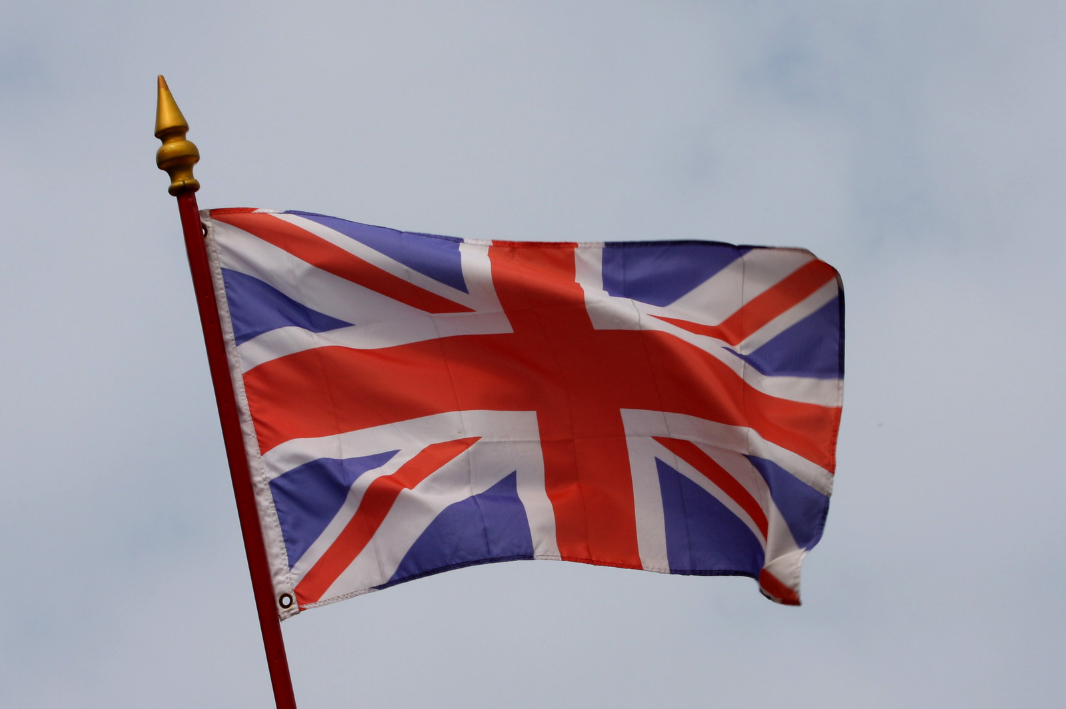
Only One in Seven Brits able to pass the UK’s Citizenship Test
According to our survey, only one in seven Brits are able to pass the government’s British citizenship test. The mock test was completed by 11,118 British people – only 1,585, or 14 per cent, achieved a pass score.
Earlier this week, the government proposed to increase the difficulty of the test and add extra topics on history and politics. However should this be happening when so few native Brits are able to pass the test already?
So how do we fix this? The citizenship test should be something that anyone who has lived here is able to pass. Anything but this is making a mockery of the process. If you’ve got a suggestion for a question that every good citizen should know, then share it with us by adding a comment to this post.
Update: Corrected the headline to match the stats. Tip of the hat to Next Left for telling us about this.


If someone wants to become a citizen of Britain they should by default be willing to embrace the British ethos.
The test should be an opportunity for applicants to learn about a) what influences have created the Britain of today? b) why are there concerns about specific issues today? and even the more conceptual c) why it is a privilege to be a British citizen.
I add the last point because this concept is stated several times throughout the citizenship literature and I suspect there might be a discrepancy between the authors’ opinions of what this means and many applicants’ opinions. Dare I say the test provides an opportunity for people to understand the deeper meaning of why it is a privilege?
What is the point in making the test more difficult? Increased difficulty means fewer applicants? I’m not sure if this is the strongest method of immigration control if that is the intent! Most people can learn by rote a series of facts if coached enough. Why is there even a test, if not for the reasons I outlined at the beginning? If the tests exist for the reasons I have suggested, I cannot see from the questions how it promotes a greater understanding of Britain and the British and of what it means to be British.
Apologies, I have no specific questions just yet… but I will think on it!
“…should by default be willing to embrace the British ethos.”
A common thread in many discussions of the methods of measuring “Britishness” that might be chosen from is this idea of a “British ethos” (although there are plenty of other words used to summon the concept to mind).
I worry that the commonly-held belief that there is a unifying British ethos, or even a single British ethos at all, is a false belief.
Britishness, as a parameter that exists in Britons, is not a single set of values at all. It varies enormously. And let’s not get too involved in why this is the case; I suspect it is more important to notice that it is so, than to over-analyse why (it has probably been the case for ages and ages and maybe for reasons that vary with time).
I agree that the test fails to promote understanding, and instead creates a situation where rote-learning will lead to a pass. But if the rote-learning can be made extensive enough to be actual learning, then is this such a bad thing? Do most Brits understand their own society, laws, history, culture, or even UK geography?
I think that the test should be turned around. Or at least partially turned around. It should test whether the applicant has gained enough knowledge to survive independently in British society without falling foul of illogical bureaucracy or inconsistencies of local regulations. Or other wise, to check if the applicant is equipped to handle being in Britain, rather than “qualified” to be awarded the “privilege”.
Most applicants for the test will probably already have the right to be in Britain; maybe they already have indefinite leave to remain or even full right of abode. So the test is wasted if it is intended as a barrier to immigration (quite apart from whether that sort of usage is justifiable on moral grounds). Instead, it should test whether the applicant can weave their way through the mire of responsibilities that a citizen might have, but which a mere resident might not. I think the test fails in achieving this too.
Having passed the test as an educated American, I’m astonished by the report that so few British citizens succeed.
David, that test isn’t British, it’s a load of randomly assorted facts. If so many British people are failing the test – something we should all be able to pass instinctively – then that test is off.
Manners, mannerisms and British peculiarities are infinitely more important to fitting into this country than knowing how many days of holiday the average school child has a year (useful? Oh enlighten me, please) or what two religions the C of E subscribes to (Christian. That will do. Go on a bit about Henry VIII if you must).
These are some of the quintessential British things that I, for one, think everybody coming into this country, whether on holiday or to live, should understand.
- Knowing the words and tune to the first verses of Jerusalem and God Save The Queen. Mandatory. Nobody gives a crap about verses two or thereafter, but there’s nothing that unites a country more than singing.
- You don’t spit in the street. Ever. That’s just fucking disgusting.
- Being able to identify, and have tasted – but not necessarily enjoyed – the following: Marmite, crumpets, beans on toast, shepherds pie, proper fish and chips, lemon curd, homemade jam, steak and kidney pie
- Identifying a Pearly Queen or King. Knowing what the hell they’re there for is another thing.
- Understanding why people don’t talk on the Tube. It’s in order to unwind and zone out, it’s not a sign of unforgiveable rudeness.
- Not eating on the Tube unless it’s last Tube, in which case everyone else will be expecting manners Armageddon thanks to the drinking.
- Knowing the basic rules of queueing: that includes patience, not pushing in, and tutting in companionable unison when waiting increases exponentially.
- Respecting the sanctity of a secular Christmas, but bear in mind even a secular Christmas must and shall include carols and a school Nativity – that’s just the way it’s done.
- Understanding the basics of British popular culture: the Beatles, EastEnders, Jeremy Clarkson, Radio 4, should all send a lightbulb off in the head.
- Knowing who the three main political parties are, and be able to give the Queen’s first name.
- Naming at least one major British newspaper – broadsheet or tabloid, doesn’t matter. You should have one brand that’s yours, even if you never actually buy it and just look at the website every now and then.
- Knowing who Nelson, Wellington and Churchill were. Not personally, even a vague “he lost his arm didn’t he?” will do.
- And on that vein, knowing a bit of history about Britain wouldn’t go amiss. Even if it’s primary school level, you should know something more about a country than that it’s busy, proud and occasionally mad and sulky. There is a long, proud history behind the proud, mad sulkiness and that will go a long way to learning why the British can be both generous and expansive, and utterly irrational.
This ‘test’ is a load of rubbish!
A few randomly assembled ‘facts’ that, for the most part, mean little, if anything, to most Brits is hardly a test of citizenship.
“What percentage of people declared themselves as Muslim in the 2001 census?” – who cares.
How many days holiday do schools have? – too many is what most people I know would answer.
How many people attend church services – didn’t have a clue before I took the test.
What we should have are questions that ask how our Justice system works or how our Parliamentary democracy is set up and the relationship between the Monarchy and the Government. Or who are the best premier league footballers or English cricketers – not because there is a difinitive list but so you can join in the discussion. An understanding of the geography of the UK and of its current and historical roles in shaping the world as we know it is vital.
All in all a very poorly designed test that simply checks a potential citizen’s ability to rote learn a set of answers rather than their understanding of the several very diverse British cultures.
What a load of rubbish! Legal voting age, fine. How many people go to church, school days and getting divorced in 1857, less so. I think Kat is right, crumpets, Jerusalem and tube etiquette are all very important, but where is the cricket knowledge?…and what about stamps and Elgar for that matter? They’re pretty British.
Few, if any, of the questions are about Britishness.
You are not more British if you know that 112 is also an emergency number.
Crass.
I hope that in the very near future the Brittish state will cease to exist, as Scotland votes to re-establish it’s independent status.
I think that too many questions are irrelevant.
Common sense questions like emergency services and where to go when there is an accident are sensible, but some of the other questions seem to have little relevance to life in this country today!
Questions such as ‘How many people [say they] attend religious services?’ reveal more about the intelligence of the examiner than the ‘Britishness’ of the examinee. While we might not all agree exactly what constitues a fair and sensible test, we could probably all agree on what doesn’t. I ‘passed’, by the way, so this isn’t sour grapes.
What is the point in the test if only 1 in seven Britons can answer. Surely the to make this test proper more than half of britons should be able to answer or nearly all. In my opinion it is a bit of a waste of time and unfair.
I failed and I was shocked at how irrelevant the questions were. Who needs to know how many people take drugs? Does it make you more British if you know that?
They should include questions about behaviour/sense of humour of the British (a volume in itself) manners (how many times you have to say please and thank you), how to order rounds in pubs, queuing, how to make tea and more importantly, cultural things like Only Fools and Horses, Fawlty Towers, Coronation Street, marmite, Branston pickle and cricket.
Learning a list of facts from a book isnt a test that you understand a culture. My husband will soon have to take this test and I have been filling him full of dvds of Are you being served and Benny Hill, far more entertaining. He already drinks tea, I cant get him onto marmite or Branston though! Guess you have to have been brought up with that!
Flawed questions. I challenge the purpose of some of the questions. Like all exam questions – they are thought up by some numptie who needs to get out more and actually engage the population then you would actually see and learn that to be a British Citizen – you don’t actually have to know how many people attend religious services. Who gives a stuff, does anybody care?
How about, do women have to cover themselves up when out of the family home? How many wives can a man have? What side of the road do we drive on? What are indicators on vehicles for? Why do we queue instead of fighting or who can shout loudest? Why can we choose to drink alcoholic drinks without having a doctor’s letter stating we’re alcoholics? Is it possible to drink tap water without being ill?
I’m Scottish, and many of the questions only in the British test were about English Laws. There’s a surprise.
As a Scot and living in what is supposed to be the UK – where are the relevant parts to someone who wants to live in Scotland? As usual mainly relevant to south of the border! Besides, does it really make you British knowing about drugs, religion and English prescription eligibility? Some of the questions require knowledge of current affairs and history and I doubt the majority of “Brits” can answer any test correctly on these subjects.